How to Evaluate Web3 Co-Living and Work Options in Bali

Source check: 27 July 2026. Listings, prices, communities, and immigration rules can change.
This guide does not claim firsthand residence in Bali or that a permanent Web3 community operates in a particular neighborhood. It offers a process for checking co-living, co-working, and event options before committing money or travel.
Start with permission to stay and work
Indonesia’s immigration authority publishes visa categories and conditions. Its current E33G remote-worker visa page describes eligibility, permitted remote duties, required evidence, and restrictions. A visa suitable for one traveler or activity may not suit another.
Before booking a long stay:
- identify the activity you will actually perform;
- read the current official visa conditions;
- confirm whether local client work, selling services, or other activity is permitted;
- use qualified immigration advice when the facts are unclear.
An event ticket, co-working membership, or accommodation booking does not grant work authorization.
Verify a co-living offer
“Co-living” is a marketing label, not a uniform product. Ask for current written answers to:
- the exact address and room type;
- total price, deposit, taxes, and refund terms;
- minimum stay and early-departure policy;
- internet availability and any service-level promise;
- quiet hours, guest rules, security, and workspace access;
- whether photographs show the specific room being offered;
- who owns or operates the property.
Use a live map and recent independent reviews, but resolve important terms with the operator in writing.
Verify a workspace
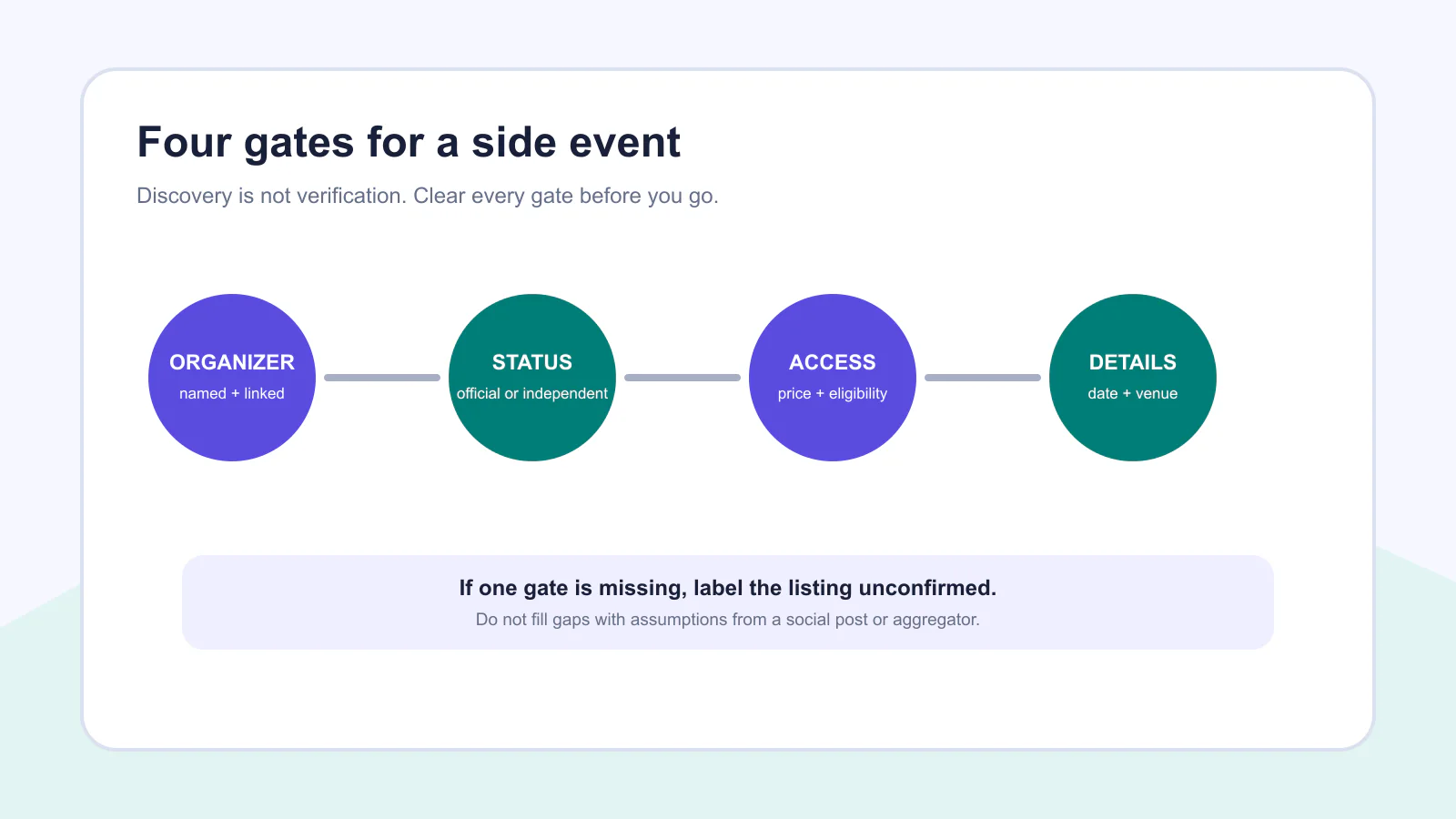
Check the workspace’s own current site for hours, access rules, day passes, meeting-room charges, backup power, and internet terms. If connectivity matters to your work, ask how the venue measures it and what happens during an outage. Do not infer that a co-working space is a Web3 hub without a dated schedule from the space or a named organizer.
Choose an area from your actual itinerary
Neighborhood labels such as “social,” “quiet,” or “startup-heavy” are subjective and can age quickly. A more reliable comparison uses:
| Question | Evidence to collect |
|---|---|
| Where must you be? | Confirmed event and workspace addresses |
| How will you travel? | Current route options at relevant times |
| What can you spend? | Written total accommodation and transport costs |
| What environment do you need? | Noise rules, room setup, workspace hours |
| What accessibility is required? | Direct confirmation from each venue |
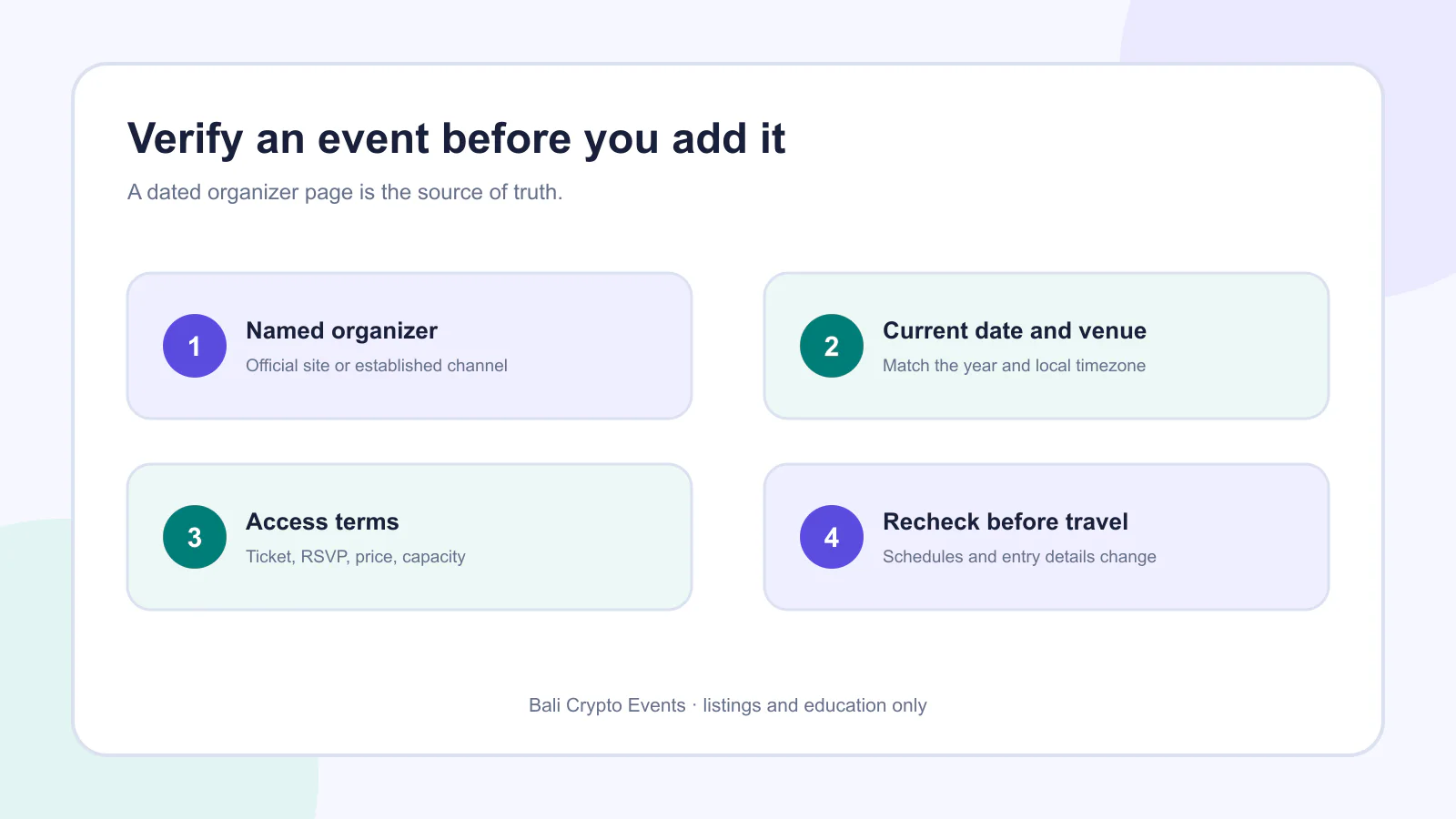
If Coinfest Asia is part of the trip, check its current official site, agenda, and side-events page before choosing a base.
Find community activity without inventing a scene
Look for a named organizer, a current event date, and an active registration or contact page. One festival week does not prove a year-round meetup rhythm, and an old event listing does not prove that a group remains active.
Good evidence includes:
- a current organizer calendar;
- multiple dated events with named hosts;
- a workspace’s current events page;
- an official festival side-event listing.
Treat claims about the “main hub,” “most common platform,” or “where most builders live” as unverified unless a dated dataset supports them.
Key takeaway
Evaluate Bali stays from official immigration rules and current written terms from each property, workspace, and event organizer. That is more dependable than a neighborhood stereotype or simulated firsthand account.
General information only. Not legal, immigration, financial, accommodation, or travel advice.
bali communityweb3 cultureco-livingdigital nomadscanggu ubud